
AMIP explores innovation, retrofit funding and decarbonisation
Housing professionals from across the sector came together for the latest Asset Management Improvement Partnership (AMIP) meeting held at Fulham Pier on 2 June . The CPD-certified event focused on retrofit funding, decarbonisation and the delivery of complex housing improvement programmes.
The day opened with a welcome from Mathew Baxter, Group Chief Executive of Echelon Group and brought together housing providers, consultants, contractors and sector specialists to share knowledge, explore emerging opportunities and discuss practical solutions.
Unlocking investment through Retrofit Credits
Antoine Pellet, Head of Retrofit Credits at HACT, led the first session – Retrofit Credits and the benefits for clients, suppliers and contractors.
He outlined how the pioneering initiative is unlocking additional funding for social housing retrofit projects.
Antoine explored how verified carbon reductions and social value generated through retrofit activity can attract investment back into the housing sector.
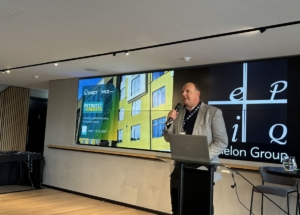
Delegates heard how the programme is helping connect private-sector investment with social housing decarbonisation ambitions, creating opportunities to generate income while supporting improved energy efficiency, reduced carbon emissions and better outcomes for residents. Antoine outlined the scale of the challenge facing the sector and demonstrated how innovative funding mechanisms could help bridge the gap between retrofit ambitions and available resources.
The session also showcased the growing momentum behind the initiative, with housing providers across the UK already engaging with the programme and generating significant projected carbon, financial and social value benefits.
Lessons from a complex decarbonisation programme
The second presentation, led by Bruce Benson, Managing Director at Mulalley, focused on the lessons learned from an SHDF-funded project for Richmond Housing Partnership.
The large-scale retrofit programme involved non-traditional Boot System homes, built to address the UK housing shortages following World War 1, in Barnes, in the London borough of Richmond upon Thames
He was joined on stage by Ciaran O’Donnell, Operations Manager, Mulalley; Katherine Hartfield, Associate, Faithorn Farrell Timms and Liam Mills, Managing Director, EEC Energy Efficiency Consultants, representing the wider client, consultant and delivery team.
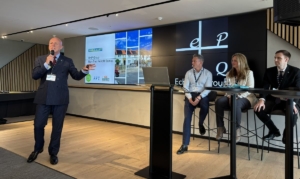
The session highlighted the importance of early collaboration between clients, consultants and contractors, alongside extensive pre-construction investigations and a fabric-first approach to retrofit delivery. Delegates were taken through the project journey, from design development and resident engagement through to construction planning, delivery and completed outcomes and Bruce shared a 4D sequencing video which had been used to walk clients through the proposed works.
Practical examples demonstrated how a coordinated approach enabled the team to address complex structural and thermal performance challenges while maintaining a strong focus on resident experience and long-term asset performance. The presentation also showcased the significant improvements achieved through measures including external wall insulation, roofing upgrades, window and door replacements, solar PV installations and ventilation improvements.
Turning retrofit into lower bills and investable returns
Joshua Williams, Head of Decarbonisation at Wates Group, Jake Franco, Partnership Manager at Octopus Energy and Meghan Kingsley-Walsh, Heat Decarbonisation Lead at London Borough of Hammersmith and Fulham, outlined how they’re working together to maximise the value of retrofit investment while delivering tangible financial benefits for residents.
The speakers explored the evolving relationship between energy efficiency, resident affordability and long-term investment models, demonstrating how partnerships between housing providers, contractors and energy companies can help unlock greater returns from retrofit programmes.
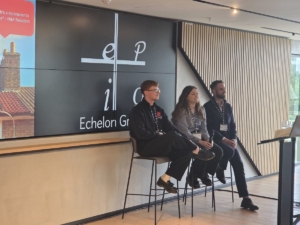
Delegates heard how combining fabric improvements with smart energy solutions and innovative funding approaches can reduce household energy costs, improve resident outcomes and create more attractive investment propositions. The session reinforced the importance of viewing retrofit not simply as a compliance or decarbonisation exercise, but as a strategic opportunity to generate wider social, environmental and financial value for both organisations and the communities they serve.
Decarbonisation at scale
Next up was Jessica John, Director of Echelon Group company Pretium Frameworks, who shared insights into the Greener Futures Partnership (GFP) Decarbonisation Delivery Framework managed by Pretium.
She outlined how it is supporting housing providers to deliver retrofit and professional consultancy services at scale, with a flexible structure designed to respond to the practical challenges of decarbonisation delivery.
The session highlighted the value of collaboration between framework partners, clients and suppliers, with a focus on live pricing, aligned specifications, ongoing due diligence, supplier relationships and continued support from pre-tender scoping through to mobilisation.
Delegates heard how the framework is helping organisations access the skills, capacity and specialist expertise needed to deliver retrofit programmes efficiently, while supporting wider sector ambitions around energy efficiency, resident outcomes and long-term asset performance.
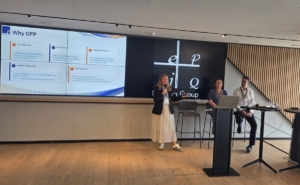
Building on the framework overview, Rowena Claydon-Smith, Head of Energy Efficiency at Abri (one of the five housing provider members of the GFP), and Ben Whiterod, Head of Retrofit at Guildmore, provided a practical case study demonstrating how collaborative delivery models can help accelerate decarbonisation programmes across the housing sector.
They shared their experiences of bringing together housing providers, consultants and contractors to deliver large-scale retrofit projects while maintaining a strong focus on quality, resident outcomes and value for money.
The presentation highlighted the importance of combining knowledge, skills and expertise across organisations to create effective delivery solutions capable of meeting ambitious net zero targets.
Delegates heard how the framework is helping housing providers improve energy efficiency across their housing stock while creating long-term benefits for residents and communities.
Through real-world examples and lessons learned, the speakers demonstrated how strong partnerships, early collaboration and a shared commitment to innovation can support the successful delivery of complex decarbonisation programmes at scale.
Putting residents at the centre of retrofit
The final presentation of the day, Warm Homes, Real Lives: Delivering Retrofit with Customers at the Centre, was delivered by Amelia Adams and Peter Bailey from LiveWest.
The session provided a powerful reminder that successful retrofit programmes are about far more than technical specifications and energy performance ratings – they are ultimately about improving people’s lives.
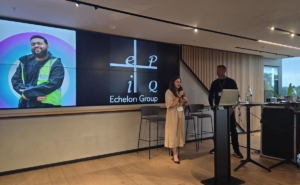
Drawing on LiveWest’s experiences, Amelia and Peter explored the importance of putting residents at the heart of retrofit delivery from the earliest stages of programme design through to completion and beyond. Delegates heard how meaningful engagement, clear communication and genuine collaboration with customers can help build trust, improve participation and ensure residents feel supported throughout what can often be a disruptive process.
The presentation highlighted the value of understanding individual customer needs and tailoring approaches accordingly, demonstrating how a resident-focused retrofit programme can deliver not only warmer, more energy-efficient homes, but also better health, wellbeing and overall customer satisfaction.
Making connections
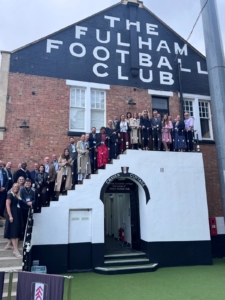
There was also plenty of time for networking and talking through the themes raised in the presentations, as well as the chance for delegates to tour Fulham’s Craven Cottage ground in the lunch break.
Looking ahead
The latest AMIP meeting once again demonstrated the value of bringing together housing professionals to tackle shared challenges, explore innovative approaches and learn from successful projects across the sector.
With increasing pressure to improve housing quality, reduce carbon emissions and maximise value from investment programmes, the insights shared throughout the day highlighted the importance of collaboration, innovation and knowledge exchange in helping organisations deliver better outcomes for residents and communities.